
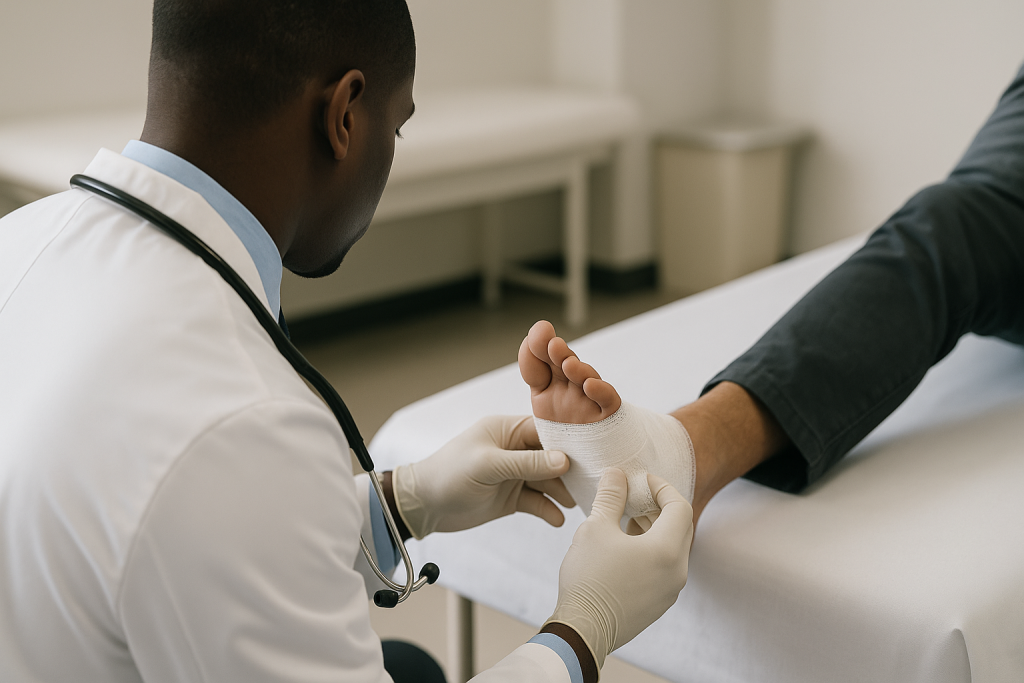
When it comes to caring for wounds at home, a little knowledge goes a long way — but misinformation can do more harm than good. Whether it’s a small cut, a blister, or a foot ulcer, how you treat a wound in those first few hours can make all the difference in healing and preventing infection. Let’s go over what’s safe to do at home — and what you should never try on your own.
✅ What’s Safe to Do
1. Wash your hands first
Before touching any wound, always wash your hands thoroughly with soap and water. This simple step prevents bacteria from entering and infecting the wound.
2. Clean gently with mild soap and water
Skip the alcohol and hydrogen peroxide! These can actually damage new skin cells trying to heal. Instead, rinse gently with clean water or mild soap.
3. Apply an antibiotic ointment
A thin layer of antibiotic ointment (like Neosporin) can help prevent infection and keep the wound moist — which promotes faster healing.
4. Cover with a sterile dressing
Protect the wound with a clean bandage or dressing to keep out dirt and bacteria. Change it daily or when it becomes wet or dirty.
5. Watch for signs of infection
Redness, swelling, warmth, pus, or a bad odor could signal an infection. If you notice these, contact your healthcare provider right away — especially if you have diabetes.
🚫 What’s Not Safe
1. Don’t use alcohol, hydrogen peroxide, or iodine directly on wounds
These might seem like good disinfectants, but they can actually delay healing by damaging healthy tissue.
2. Don’t pop blisters or pick scabs
Blisters protect the skin underneath as it heals, and scabs act as a natural bandage. Picking at them increases the risk of infection and scarring.
3. Don’t ignore foot wounds if you have diabetes or poor circulation
Even a tiny blister or scratch can quickly turn serious. Always have a podiatrist check any wound that doesn’t start healing within a few days.
4. Don’t use home remedies like toothpaste or butter
While these “old tricks” are common myths, they actually trap bacteria and slow healing — sometimes leading to infection.
👣 When to Call a Foot Specialist
If you notice slow healing, increasing pain, or any sign of infection — or if you have diabetes — it’s best to seek professional help. Podiatrists can safely clean, dress, and treat wounds to promote healing and prevent complications like ulcers or infections.
Proper wound care is more than just keeping it clean — it’s about protecting your health, one step at a time.
📍 Serving the Tampa, FL and North Carolina community with expert care and heart.
📞 Call us today: 813-344-1932
🌐 Learn more at: cfasdoc.com
Let’s walk through this season of life—pain-free, confident, and comfortable.
Your feet have carried you this far. Let’s take care of them.
Follow us for tips, updates, and real patient stories:
📌 Facebook: facebook.com/cfasdoc
📌 Instagram: instagram.com/cfasdoc
📌 TikTok: tiktok.com/@cfasdoc
Because every journey begins with a healthy first step.