 By a Podiatrist
When patients come into my clinic with heel pain, knee pain, or persistent foot soreness, one of the first things I look at is foot type. The structure of your arch affects how your foot absorbs shock, how your ankle and knees align, and how your body moves with every step.
Understanding your foot type can help you choose the right shoes, prevent injury, and even explain pain you’ve had for years.
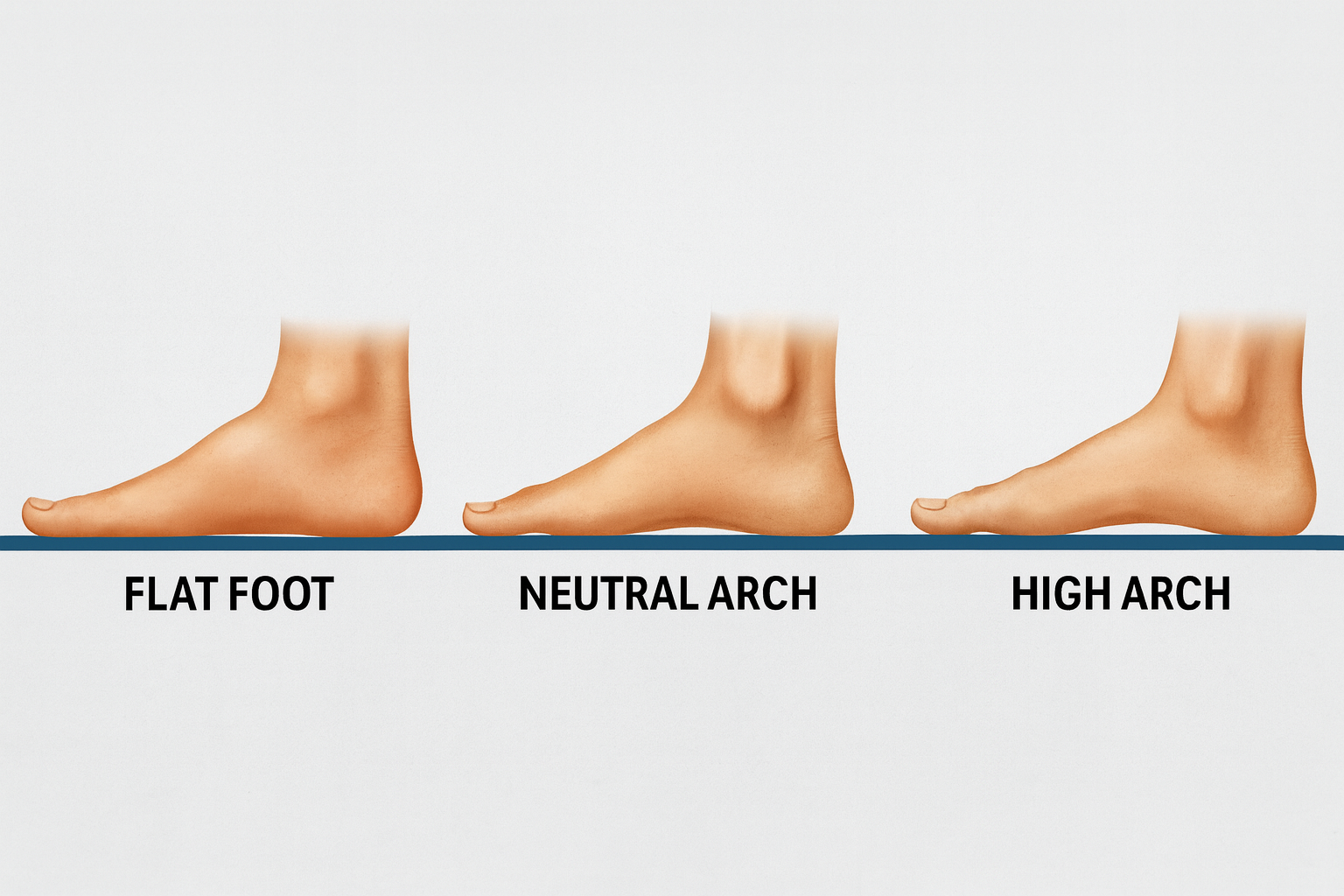
Let’s break down the three main foot types — flat feet, high arches, and neutral arches — and how each one affects your comfort and long-term foot health.
- Flat Feet (Pes Planus)
If you have flat feet, your arches are low or fully collapsed, causing most of your foot to touch the ground.
Common Signs
- Your feet roll inward when you walk (pronation).
- Shoes wear out quickly on the inside edge.
- You feel tired or achy feet after standing for a while.
Symptoms You Might Experience
- Heel pain (plantar fasciitis)
- Arch soreness
- Shin splints
- Knee or back pain due to altered alignment
What It Means for Your Foot Health
Flat feet often struggle to support your body weight efficiently, leading to overstretched tendons and muscles. Not everyone with flat feet has pain, but when symptoms do appear, they usually get worse over time without proper support.
What Helps
- Supportive orthotics
- Stability shoes
- Stretching the Achilles tendon
- Strengthening foot intrinsic muscles
- High Arches (Pes Cavus)
High arches mean your foot doesn’t flatten enough to absorb shock. Pressure is concentrated on the ball and heel instead of being spread evenly.
Common Signs
- Little to no footprint in the middle when you step on a wet surface
- Frequent ankle sprains
- Calluses under the ball and heel
Symptoms You Might Experience
- Heel pain
- Metatarsalgia (pain in the ball of the foot)
- Stress fractures
- Hammertoes or claw toes from tight tendons
What It Means for Your Foot Health
High-arched feet are often rigid, meaning they don’t adapt well to uneven surfaces. This lack of shock absorption can lead to chronic foot and ankle pain and greater risk of injury.
What Helps
- Cushioned orthotics
- Shoes with good shock absorption
- Stretching tight calf and foot muscles
- Strengthening ankle stabilizers
- Neutral Arches
Neutral arches are the most efficient at absorbing shock and supporting natural movement.
Common Signs
- Footprints show a moderate arch
- Weight is evenly distributed across the foot
- Minimal shoe wear patterns
Symptoms You Might Experience
Even with “ideal” feet, pain can still happen — especially with poor footwear or repetitive strain.
What Helps
- Supportive, well-fitted shoes
- Preventive stretching and strengthening
- Avoiding overly worn-down footwear
Why Foot Type Matters
Your arches determine how your foot interacts with the ground, how your tendons function, and how shock travels through your legs. Identifying your foot type can help you:
- Pick the right shoes
- Prevent chronic pain
- Improve athletic performance
- Avoid long-term problems like arthritis or tendon degeneration
If you’re unsure about your foot type or have been dealing with persistent pain, getting evaluated by a podiatrist is the best first step. A simple exam (and sometimes imaging) allows us to diagnose your foot structure and create a tailored plan to keep you comfortable and active.
📍 Serving the Tampa, FL and North Carolina community with expert care and heart.
📞 Call us today: 813-344-1932
🌐 Learn more at: cfasdoc.com
Let’s walk through this season of life—pain-free, confident, and comfortable.
Your feet have carried you this far. Let’s take care of them.
Follow us for tips, updates, and real patient stories:
📌 Facebook: facebook.com/cfasdoc
📌 Instagram: instagram.com/cfasdoc
📌 TikTok: tiktok.com/@cfasdoc
Because every journey begins with a healthy first step.