 As a podiatrist, I often remind my patients of one simple truth:
Your feet age right along with you.
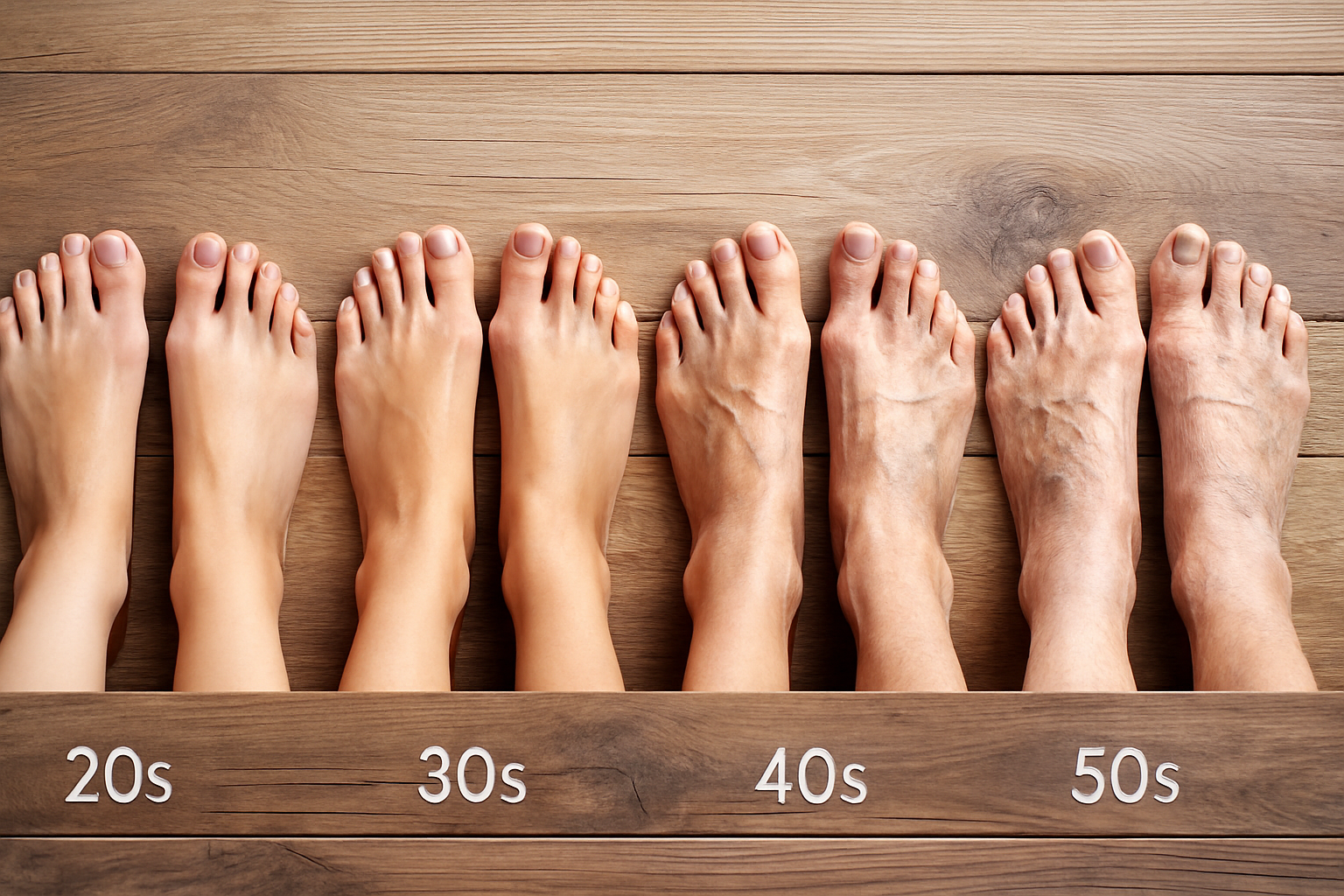
The needs you have in your 20s will not be the same as the needs you have in your 50s or 60s — and that is completely normal.
Let me walk you through what typically happens to your feet during each decade of life, and what you can do to stay comfortable, mobile, and pain-free.
👣 In Your 20s: The “Foundation” Years
In your 20s, your feet are generally strong, flexible, and resilient — but they’re also the years where bad habits begin.
Common Foot Issues in Your 20s
- Flat feet or collapsing arches
- Ankle sprains
- Plantar fasciitis (often from unsupportive shoes)
- Toenail problems, including ingrown nails
- Athlete’s foot or warts (common in gyms, dorms, locker rooms)
My Advice to Patients in Their 20s
- Wear supportive shoes — especially if you stand a lot for work.
- Don’t ignore recurring heel or arch pain.
- Moisturize your feet regularly.
- Avoid overly tight shoes — this is when bunions often begin forming.
- Treat fungal infections early; they spread quickly.
Good habits now will save you years of pain later.
👣 In Your 30s: Strength Meets Stress
By your 30s, life is usually more demanding — kids, work, long hours standing or walking — and your feet start to feel the impact.
Common Foot Issues in Your 30s
- Arch fatigue
- Tendonitis (often Achilles or posterior tibial tendon)
- Early bunion or hammertoe changes
- Heel pain from overuse
- Worsening flat feet
My Advice to Patients in Their 30s
- Consider custom orthotics if you notice aches becoming more frequent.
- Choose supportive everyday shoes and avoid worn-out footwear.
- Stretch daily — especially your calves and plantar fascia.
- Address deformities early before they progress.
This is the decade where small problems can still be reversed.
👣 In Your 40s: Wear-and-Tear Begins to Show
By your 40s, the natural padding on the bottom of your feet begins to thin. Joints may feel stiffer. Recovery takes longer.
Common Foot Issues in Your 40s
- Arthritis in the big toe joint
- Ball-of-foot pain (metatarsalgia)
- Worsening bunions/hammertoes
- Heel spurs
- Tendon injuries
My Advice to Patients in Their 40s
- Don’t dismiss “minor” morning stiffness — it can be early arthritis.
- Ensure your shoes have good cushioning to replace lost fat pad.
- Maintain a healthy weight to decrease pressure on your feet.
- Strengthen the intrinsic foot muscles.
Your 40s are a good time to reevaluate your footwear and foot health routines.
👣 In Your 50s: Structural Changes Become More Noticeable
In your 50s, joints lose cartilage, ligaments become looser, and circulation may begin to slow. This is a decade where proactive care matters even more.
Common Foot Issues in Your 50s
- Pronounced arthritis
- Neuromas (nerve pain in the toes)
- Progressive bunions
- Achilles tendon degeneration
- Plantar fasciitis recurrence
- More frequent swelling
My Advice to Patients in Their 50s
- Choose shoes with rigid soles if you have arthritis in the big toe.
- Orthotics can greatly reduce strain on tendons and joints.
- Don’t ignore numbness or tingling — this can be nerve-related.
- Elevate your feet daily to reduce swelling.
Your feet can stay strong, but they need consistent support.
👣 In Your 60s and Beyond: Protecting Mobility
In your 60s+ age group, the biggest goal is maintaining mobility, balance, and independence. Feet often experience decreased circulation, thinning skin, and slower healing.
Common Foot Issues in Your 60s+
- Diabetic foot changes (if applicable)
- Numbness or neuropathy
- Corns and calluses from pressure points
- Increased risk of falls due to unstable gait
- Thickened or fungal toenails
- Severe arthritis
My Advice to Patients in Their 60s+
- Regular foot checks — especially for patients with diabetes.
- Keep toenails trimmed straight across to avoid complications.
- Use shoes with non-slip soles, cushioning, and proper fit.
- Don’t wait to seek care for wounds, redness, or swelling.
- Maintain circulation through walking and gentle exercises.
Proper foot care now protects your independence in the long run.
Final Thought From Your Podiatrist
No matter your age, your feet deserve the same attention you give to your eyes, heart, or teeth.
The earlier you care for them, the longer they’ll support you — literally.
If you ever feel pain, notice a new deformity, or simply want a preventive check, don’t hesitate to come in. Your feet reflect your overall health more than you realize, and a few simple steps today can make a lasting difference for decades ahead.
📍 Serving the Tampa, FL and North Carolina community with expert care and heart.
📞 Call us today: 813-344-1932
🌐 Learn more at: cfasdoc.com
Let’s walk through this season of life—pain-free, confident, and comfortable.
Your feet have carried you this far. Let’s take care of them.
Follow us for tips, updates, and real patient stories:
📌 Facebook: facebook.com/cfasdoc
📌 Instagram: instagram.com/cfasdoc
📌 TikTok: tiktok.com/@cfasdoc
Because every journey begins with a healthy first step.